Ottawa winters and roofs
Roofing in Ottawa: the ice dam is usually an attic problem
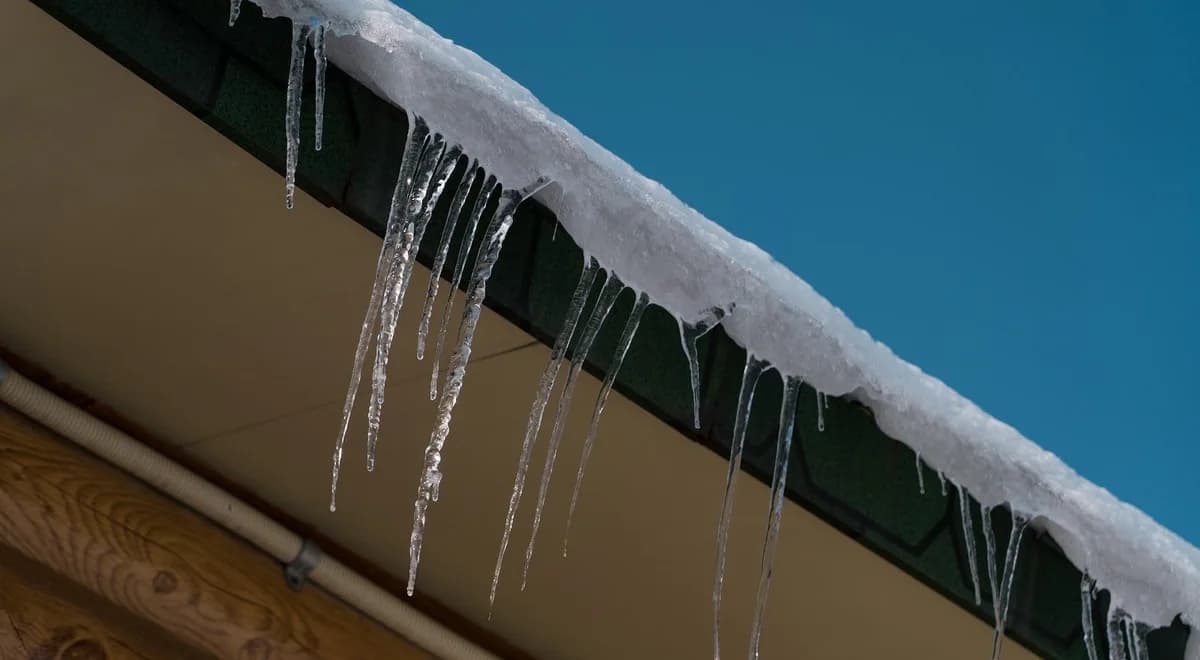
The ice ridge at the eaves in February is the most common reason an Ottawa homeowner calls a roofer, and new shingles are rarely the answer to it. Natural Resources Canada traces it to heat escaping into the attic, which puts the fix above the ceiling rather than on top of the roof.
What actually forms the dam
Ice damming usually occurs when there is a significant amount of snow on the roof. Heat escaping from the house melts snow against the sheathing, the water runs down to the overhang, and if the air and the overhang are below freezing the water freezes there and starts the dam. Everything that melts afterwards backs up behind it.
Natural Resources Canada's conclusion follows from that mechanism: the best prevention for ice damming is to seal all attic air leaks and insulate thoroughly. A well sealed and insulated attic gives a cool roof, and a cool roof generally does not develop ice dams.
The edge of the attic is the hard part
Many attics, including those under low-sloped roofs, have little room for insulation where the attic floor meets the eaves. Once a baffle is in place to keep a ventilation gap between the insulation and the roof sheathing, only about 100 mm may be left. That thin edge is exactly where snow melts and the dam forms, so the guidance is to put the best insulation possible at that edge.
Ventilation is the second line of defence, not the first. Existing vents have to be working and not blocked by insulation or debris, and the space between the top of the insulation and the underside of the sheathing has to stay open. Sealing air leaks comes before adding vents, because venting a leaky attic moves warm moist house air through it faster.
What to ask a roofer about a recurring dam
- Ask whether they have been in the attic. A quote for a recurring ice dam written without going up there is a quote for shingles, not for the cause.
- Ask what they found at the eaves: insulation depth, whether baffles are in place, and whether soffit vents are clear or packed with insulation.
- Ask which air leaks were identified. Attic hatches, light fixtures, bathroom fans and plumbing stacks are where house air gets in.
- Treat heated cables as a symptom manager rather than a fix, and price them as such.
Permits, and who carries the liability
Replacing a roof covering is not usually what triggers a City permit. Structural work is: the City's threshold is an installation, erection, extension, or material alteration or repair, and altering a structure of more than 10 square metres. Changing rafters, adding a dormer or altering the roof line sits inside that.
Where a permit is required, the City states the owner and the builder are responsible for the process and equally liable under the Ontario Building Code Act. The permit is posted visibly for the duration of the work, and construction has to seriously commence within six months of issue or the permit can be revoked.
Sources, checked 2026-09-18:
Buyer guide
Hiring a roofer in Ottawa
What separates a great roofer from a cheap quote, and the questions worth asking before you sign.
Why insist on ice-and-water shield?
Ottawa's winters make ice dams a real risk. A proper reroof includes ice-and-water membrane along the eaves and in the valleys, not just felt. Ask the roofer to point it out on the quote.
Does ventilation matter as much as the shingles?
Poor attic ventilation cooks shingles from below and worsens ice dams. A good Ottawa roofer inspects intake and exhaust venting and includes any fixes in the plan.
What warranty should be in writing?
Separate the manufacturer's shingle warranty from the roofer's workmanship warranty. The workmanship warranty is the one that covers install errors; confirm its length in writing.
Why confirm insurance before anyone is on the roof?
Roofing is high-risk work. Make sure the company carries liability insurance and WSIB coverage so you are not exposed if someone is hurt on your property.
April to October
When should you book a roofer in Ottawa?
Asphalt shingles seal to each other with an adhesive strip that relies on warmth, and roof work needs a surface that is neither frozen nor slick. Ottawa averages 6.2 °C in April, 21.3 °C in July, and 2.0 °C in November. Emergency repairs happen whenever they must; planned replacement sits inside the warm half of the year for reasons of adhesion rather than comfort.
Temperatures are the Environment and Climate Change Canada: Canadian Climate Normals for station OTTAWA CDA, 1991-2020. Checked 2026-09-10. Any single year can run warmer or colder than the normals.
Before you hire
What should you check before hiring a roofer in Ottawa?
Consumer Protection Ontario publishes guidance written specifically for hiring a roofer, including what belongs in a written contract and what your rights are when the work is not done as promised. Ottawa Service Directory is a listings site, not a regulator: we publish what a business reports about itself, so confirm what applies to your job with the source below and with the business before work starts.
Source: Consumer Protection Ontario: hiring a roofer. Checked 2026-08-24. Rules and thresholds change, so confirm before work starts.
 Featured