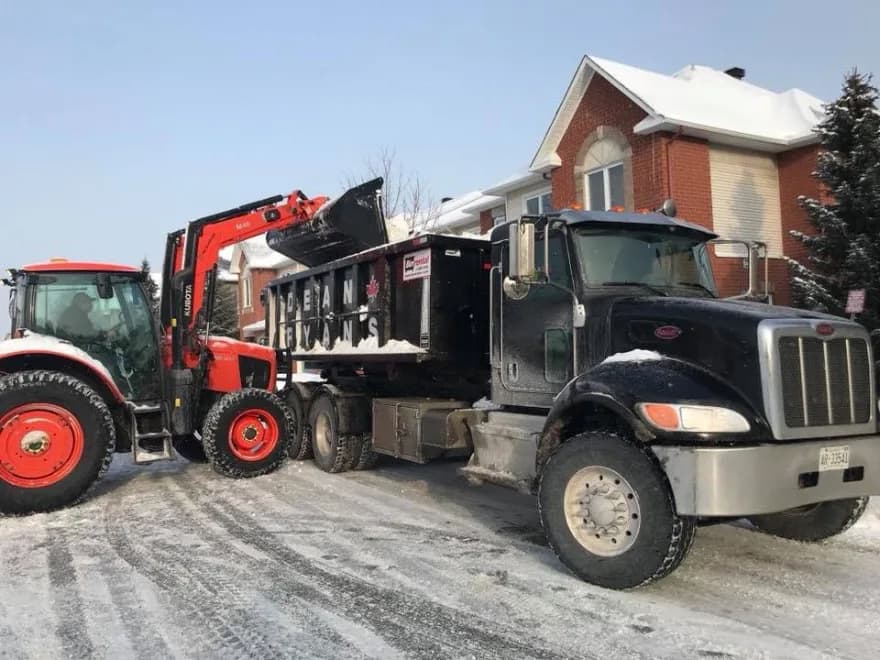
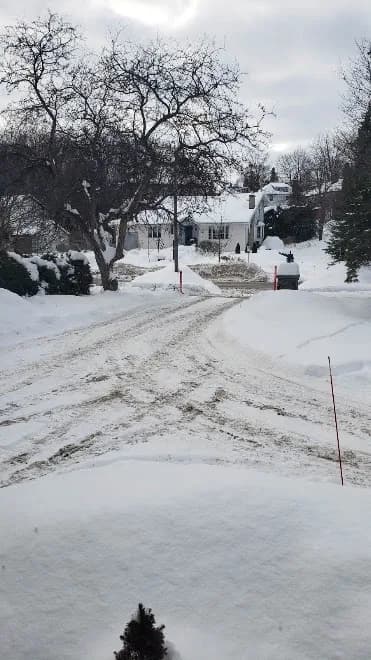
Snow plowing and snow blowing
Snow removal in Ottawa: what to check before you sign
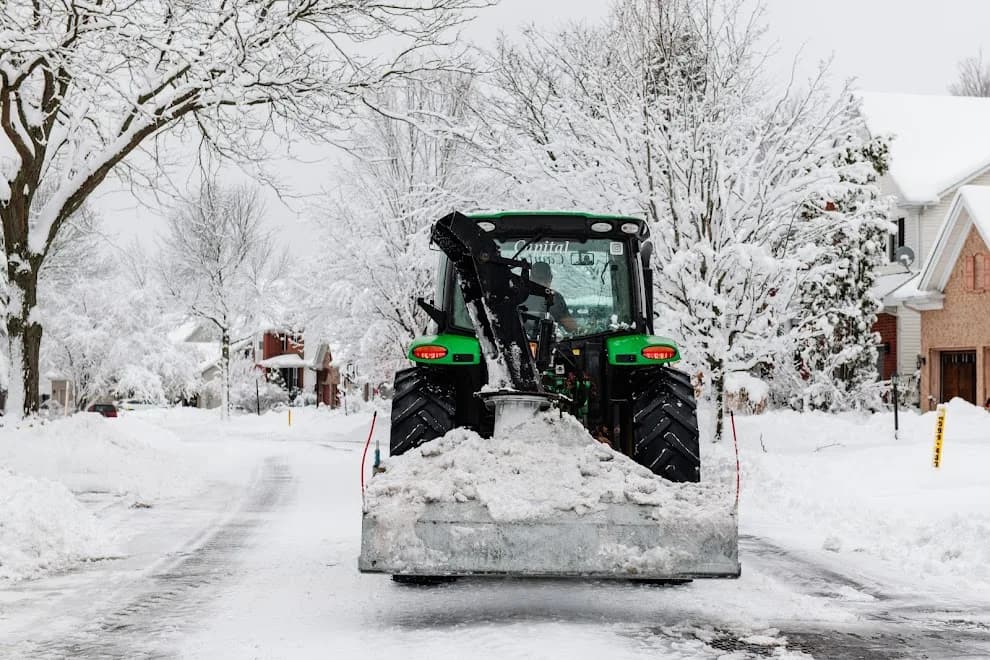
Most residential snow removal in Ottawa is sold as a winter contract: after each snowfall past an agreed depth, the company clears your driveway with a truck-mounted plow or a snowblower. Commercial lots, condo corporations and multi-unit properties buy the same clearing under a different set of rules, because whoever occupies the property carries a duty of care that a contractor licence does not answer for them.
The City of Ottawa licenses snow plow contractors who work on private property, and Ontario sets a notice period that starts the day someone falls.
How often an Ottawa winter reaches the trigger
Environment and Climate Change Canada's 1991-2020 normals for the Ottawa CDA station put average snowfall at 184.5 cm a year, most of it between December and March. Snow falls on about 49 days a year, but only 12.6 of those days bring 5 cm or more, and 4.5 bring 10 cm or more.
The trigger depth in your contract decides which of those days bring a visit. With a 5 cm trigger, the lighter days are yours to shovel or salt. A storm that runs overnight can pass the trigger without either calendar day reaching it, so ask how the contract counts snow that falls across two days.
How to check that a snow plow contractor is licensed
- Ask for proof of the City of Ottawa business licence. The City also publishes a list of licensed snow plow contractors. The copy we read was dated January 28, 2026, so a company licensed after that may not appear on it yet.
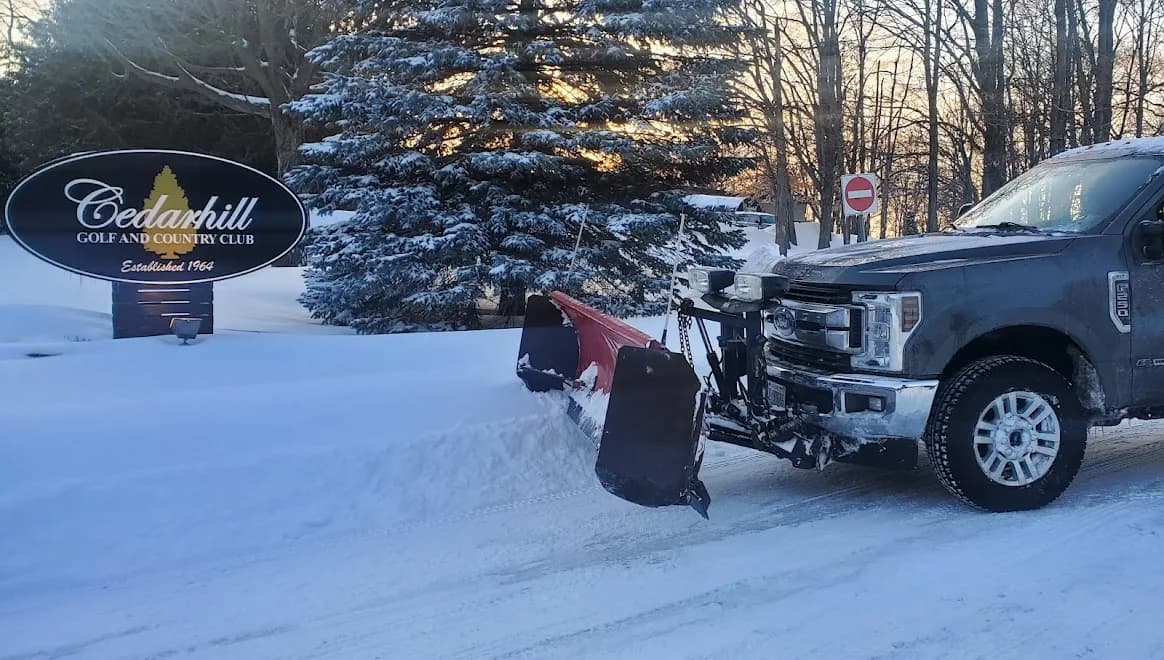
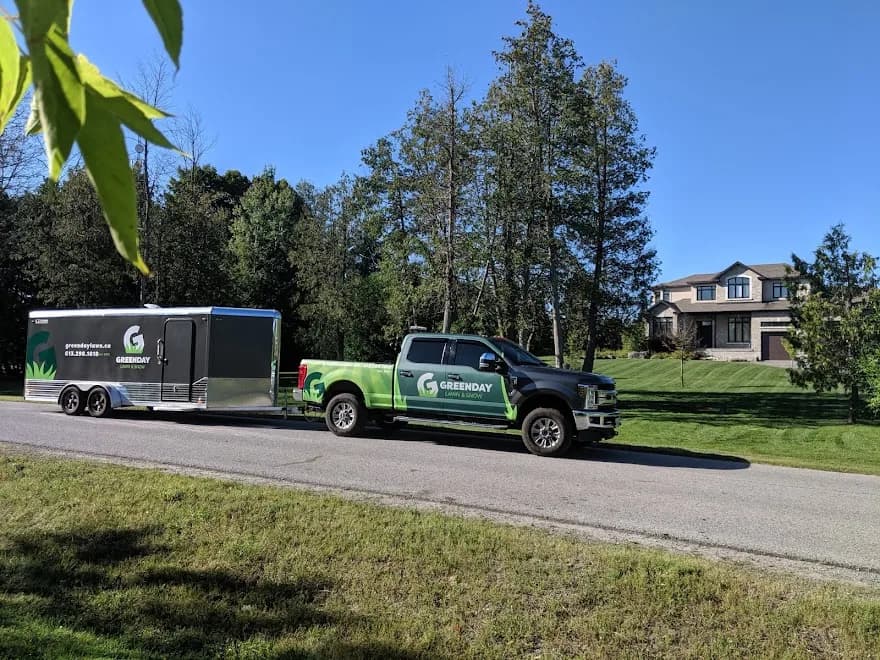
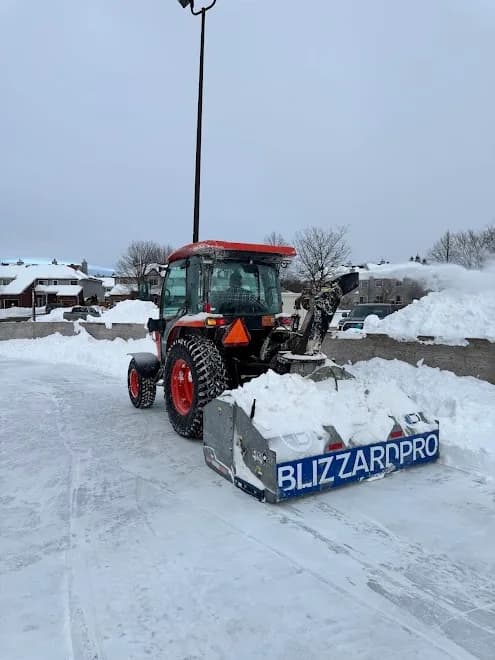
- Look at the plow vehicle. It has to carry the City's orange snow plow plate with a valid annual sticker, and the business name and phone number on both sides.
- Expect a copy of the City's Snow Knowledge sheet. Every licensed contractor has to give one to each client.
The licence also requires at least $2 million in liability insurance. It applies to anyone clearing private property with equipment that needs a vehicle; someone working only with shovels, or with equipment that does not need a vehicle, is outside it. To report a contractor who is unlicensed or breaking these rules, call 3-1-1.
Where the snow is allowed to go
A licensed contractor may not throw, push or dump snow onto the road, the sidewalk, a neighbour's property or an accessible parking space, and snow a contractor dumps there illegally has to be cleaned up within four hours. The City also asks that fire hydrants be kept clear.
The snow stays on your lot. Where there is no room for it, the City's rule is that the contractor takes it to an authorized snow disposal site, so on a tight lot ask whether the contract covers hauling.
Paying for a season, and cancelling
The City warns about one scam by name: a seller takes payment for the whole season and never comes back. Its advice is to keep any deposit low and pay in stages, and it calls staggered payment, such as post-dated cheques, an industry best practice. Get the contract in writing, check that the company name on it matches the flyer, and keep a copy.
If you sign at your door or in your home, Ontario's Consumer Protection Act gives you a 10-day cooling-off period to cancel for any reason, starting the day you receive the written copy.
Driveway markers and salt
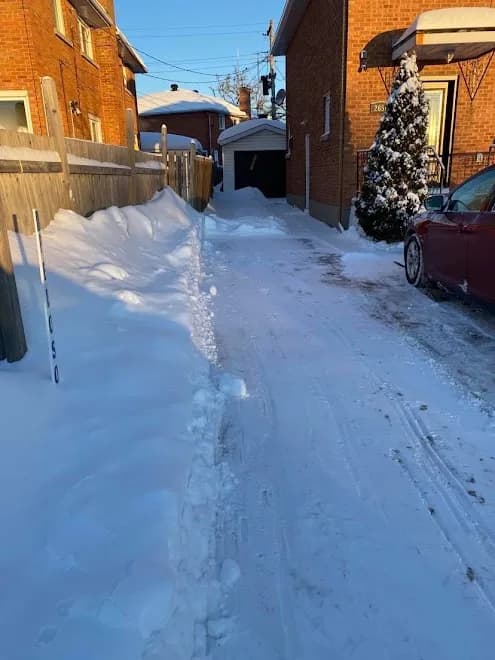
Markers along the driveway edge are allowed from October 20 to April 30, two per property, set 5 feet back from the sidewalk, or 7 feet from the edge of the road where there is no sidewalk. They may show only a logo and a phone number, and they cannot be lit.
Because they go into the ground, the City says the contractor and the homeowner are both responsible for getting utility locates first, and Ontario One Call provides locates free of charge.
On salt, the City's advice to contractors is to clear the snow first, or salt before the storm, and to use less than most people expect: on average, one cup covers a single-car driveway.
Commercial and condo properties: the duty stays with you
Ontario's Occupiers' Liability Act puts the duty on the occupier, and defines that as anyone in physical possession of the premises, or anyone with responsibility for and control over its condition. It says so despite there being more than one occupier of the same premises, so a condo corporation, a landlord and a managing agent can each hold it over one parking lot at the same time.
Section 3(1) sets the standard: take such care as in all the circumstances is reasonable to see that people entering are reasonably safe.
Contracting the clearing out does not move that duty. Section 6(1) says it can answer it. An occupier is not liable for an independent contractor's negligence if it acted reasonably in entrusting the work, took the steps it reasonably ought to have taken to be satisfied the contractor was competent and the work had been properly done, and it was reasonable for the work to be contracted out at all.
Competence and checking the work are the two halves that sentence turns on, and what you keep during the season is what evidences them.
The 60-day notice clock, and the copy you have to pass on
Since January 29, 2021, section 6.1 of the Occupiers' Liability Act has required written notice before an action can be brought for personal injury caused by snow or ice. It has to arrive within 60 days of the occurrence, give the date, time and location, and be personally served or sent by registered mail.
It can go to an occupier or to the independent contractor hired to remove snow during the period the injury happened, and reaching either one is enough to stop the 60-day limit applying to anyone.
Subsection (3) is the one that catches managed properties. An occupier who receives a notice has to serve a copy on every other occupier of the premises during that period, and on the snow contractor, in person or by registered mail. A notice read and left in an inbox has not been passed on.
Two things remove the 60-day bar outright: the death of the injured person, and a judge finding reasonable excuse for late or insufficient notice where the defence is not prejudiced.
What the Ottawa licence covers on a commercial lot, and the gap it leaves
- Check the licence covers this season. A licence is required for any business that plows or removes snow from private property with a snow plow, and a commercial lot is private property. Licences expire on October 31 each year, so a contract signed in the autumn should be matched to a licence for the winter it covers.
- Read what the City's insurance minimum actually covers. To be licensed, a contractor files proof of $2 million in Motor Vehicle Liability insurance for each snow plow used in the business. That is vehicle insurance on the plow. It is not general liability cover for a fall in your parking lot, so ask separately what the company carries for work on your property.
- Ask to see the contract records. Licensed contractors have to keep a record of every contract, transcribed in ink or held in a recording system. On a commercial site that record is the closest thing to a service log, and a service log is what section 6(1) of the Occupiers' Liability Act expects an occupier to have been checking.
- Look for the plate and the lettering. Every snow plow carries a City-issued numbered plate, and both sides of the vehicle show the business name and telephone number.
The City publishes its list of licensed snow plow contractors, and 3-1-1 takes reports of anyone working without a licence or breaking these rules.
Where the snow goes when the lot is full
A licensed contractor may not throw, push, dump or otherwise deposit snow or ice on City property, on private property other than their client's, or on an accessible parking space. That last one is worth reading twice on a commercial site. Accessible spaces sit nearest the door, which is what makes them the convenient place to put a pile once the rest of the lot is cleared.
Where a property cannot hold the snow it produces, the City's position is that the snow goes to an authorized snow disposal facility, and Ontario publishes guidelines for snow disposal and de-icing operations. On a tight site, settle at the quoting stage whether hauling sits inside the price or outside it, because that is the line a heavy winter moves.
One salt requirement is widely assumed and does not apply here. Environment Canada asks organizations using more than 500 tonnes of salt a year to develop a salt management plan, and the City notes that contractors working on private property do not apply that volume, so they are not required to hold one.
Timing is the better question: salt works best between -6 and -10 degrees, and the advice is to apply it ahead of the snow, or to clear the snow first.
Sources, checked 2026-09-18:
December to March, arranged before November
When should you book a snow removal company in Ottawa?
November is the first month of an Ottawa year whose average overnight low sits below freezing, at -1.8 °C, and December through March all average at or below 0 °C across the whole day. That four-month stretch is what a seasonal contract has to cover, which is why the arrangement is normally made in autumn rather than after the first storm.
If you are reading this in September or October you are early, and early is the point.
Temperatures are the Environment and Climate Change Canada: Canadian Climate Normals for station OTTAWA CDA, 1991-2020. Checked 2026-09-10. Any single year can run warmer or colder than the normals.
Before you hire
What should you check before hiring a snow removal company in Ottawa?
Snow plow contractors are licensed by the City of Ottawa, and the City publishes what a contractor may and may not do with the snow it clears, along with how to report an operator working without a licence.
Ottawa Service Directory is a listings site, not a regulator: we publish what a business reports about itself, so confirm what applies to your job with the source below and with the business before work starts.
Source: City of Ottawa: snow removal services, what consumers need to know. Checked 2026-08-24. Rules and thresholds change, so confirm before work starts.
 Claimed